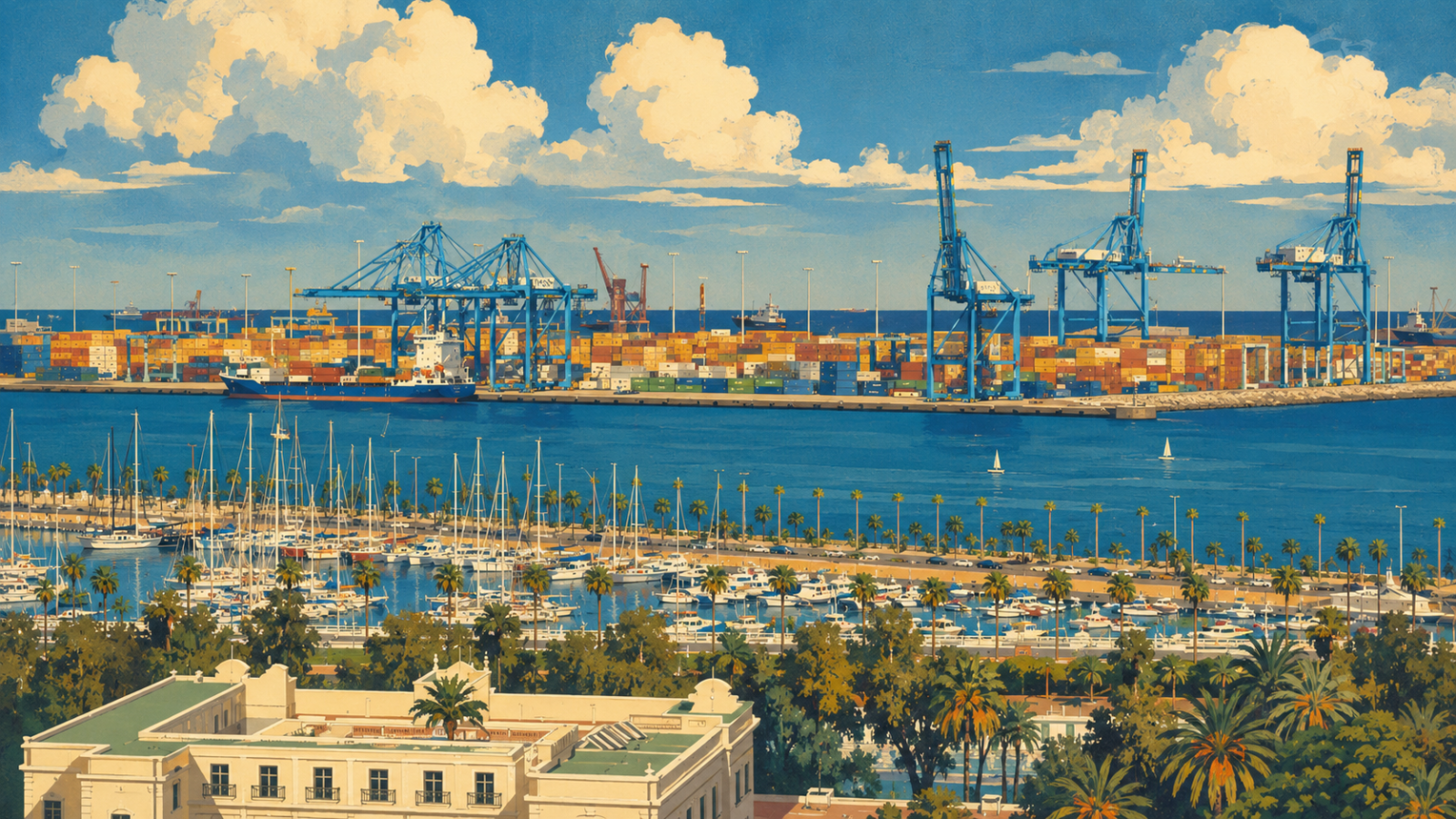
ARC Atlantic Rally in Las Palmas: Start Day Guide
Atlantic Rally for Cruisers from Gran Canaria to Saint Lucia
Every November, around 150 yachts leave Las Palmas for Saint Lucia in the Atlantic Rally for Cruisers. In 2026 the main start is on 22 November. This guide covers the ARC and ARC+ dates, the two-week programme in the marina and how visitors can enjoy the send-off.
The ARC Atlantic Rally is the biggest sailing event of the year in Las Palmas. Every November, the Atlantic Rally for Cruisers (ARC) fills the marina at Muelle Deportivo with around 150 yachts. Then, on one Sunday, the whole fleet sails out of the port and heads for Saint Lucia in the Caribbean. The crossing is about 2,700 nautical miles long, and most boats need 18 to 21 days.
For visitors, the best part is that the show is free. You do not need to know anything about sailing. You only need to walk to the harbour wall, find a place in the sun and wave. Locals do the same every year, and it is one of the few days when the whole city seems to agree on something.
ARC 2026: Dates and Timetable
The ARC 2026 main start is on Sunday 22 November. The sister rally, ARC+, leaves two weeks earlier. The table shows the key dates for the 2026 rallies.
| Date | What happens |
|---|---|
| Sunday 8 November | ARC+ start day: Las Palmas to Mindelo, Cape Verde |
| Tuesday 10 November | ARC office opens in Las Palmas and the shore programme begins |
| Sunday 15 November | Last date for ARC boats to arrive in Las Palmas |
| Friday 20 November | ARC+ fleet leaves São Vicente for Grenada |
| Saturday 21 November | Skippers' briefing (for crews only) |
| Sunday 22 November | ARC start day: Las Palmas to Rodney Bay, Saint Lucia |
| Thursday 10 December | ARC+ prizegiving in Grenada |
| Friday 18 December | ARC finish line closes in Saint Lucia |
| Saturday 19 December | ARC prizegiving in Saint Lucia |
Exact times for the public events in Las Palmas are usually published shortly before the rally. Please check the World Cruising Club website for the final timetable.
What Is the Atlantic Rally for Cruisers?
The ARC is a transatlantic sailing rally for cruising yachts. It follows the classic trade wind route from the Canary Islands to the Caribbean. The wind blows mostly from behind, so the sailing is steady and downwind.
The rally is open to monohulls, multihulls and even motor boats from about 27 to 100 feet (8 to 32 metres). Crews are of all ages and nationalities. Many are families, and some are first-time ocean sailors.
Is it a race? Not really, and that is the point. The ARC is a cruising rally. There is a start line and a finish line, and the boats are split into divisions by size, type and level of competition. A racing division exists for crews who want to compete seriously. Most people simply want to arrive safely, with good stories to tell.
ARC and ARC+: Two Routes Across the Atlantic
Sailors can choose between two routes. Both start in Las Palmas.
- ARC: a direct crossing from Las Palmas to Rodney Bay on Saint Lucia. It is about 2,700 nautical miles and takes most yachts 18 to 21 days.
- ARC+: a two-stage route. The first leg goes about 850 nautical miles south to Mindelo in Cape Verde and takes 5 to 7 days. After a stopover, the fleet sails about 2,150 nautical miles to Port Louis Marina in Grenada, which takes 12 to 16 days.
ARC+ started in 2013. It gives sailors time to see Cape Verde and to fix small problems before the long leg. For visitors in Las Palmas, it means two send-offs in November, not one.
A Short History of the ARC
The ARC was the idea of the sailor Jimmy Cornell. He wanted to give ocean sailors a reason to leave the Canaries together and to make the crossing safer and more social. The first rally left Las Palmas in November 1986. It had 204 entries from 24 countries and finished in Barbados.
The rally has run every year since then, even during Covid. Since 1986, more than 30,000 sailors have taken part. In 2025 the 40th ARC started with 145 yachts and more than 800 sailors from over 40 nations. The busiest year was 2015, when 268 yachts crossed in the two rallies together. Today the event is run by the World Cruising Club.
The record crossing is 8 days and 6 hours, set by the maxi yacht Rambler 88 in 2016. Most crews are happy with three weeks and a calm sea.
Two Weeks of Preparation in the Marina
Before start day, Las Palmas becomes a busy sailing village. The ARC office is based in Muelle Deportivo, and the crews arrive in the days before the rally. For about two weeks they join seminars, safety briefings, parties and family activities. They also buy food and drink for the crossing. Las Palmas is a very practical place for this, with all marine services and good supermarkets close to the port.
The city and the island support the event. The Tourist Board of Gran Canaria, the Port Authority of Las Palmas and the City Hall of Las Palmas de Gran Canaria have helped host the rally for many years. ARC sailors have also planted trees in the mountains of Gran Canaria every year since 2010, as part of the Foresta Project.
Where and When to Watch the Start
The best place to watch is the harbour wall and the waterfront around Muelle Deportivo. In past years the boats began to leave the marina at about 09:00. The official start gun for the first division was in the middle of the day. In 2025, the multihull division started first at 12:30. The start line is a short way south of the port.
Here are some simple tips for a good day:
- Arrive early. Thousands of spectators come, and the best places on the wall fill up fast.
- Bring sun protection and water. There is little shade on the breakwater.
- Look for crews in fancy dress. Many boats leave with flags, music and dancing on deck.
- Join the public events. The opening ceremony and the start day are open to everyone. In 2025, the ARC opening ceremony was held one week before the start.
- Do not forget the ARC+ send-off on 8 November if you are visiting earlier in the month.
Why Las Palmas Is the Home of the ARC
Las Palmas has been the start port of the ARC since the first rally in 1986. The reasons are simple. The Canary Islands lie at the start of the trade wind route, the marina is in the middle of the city, and the port has everything a crew needs before an ocean crossing. For many sailors it is also an easy place to arrive, with a large international airport on the same island.
For the city, late November is known as "ARC season". Hotels, bars and restaurants around Santa Catalina and Las Canteras are busy with sailors and their families. If you plan to visit in these weeks, I suggest you book your accommodation early.
Getting There / Transport Connections
The ARC starts from Muelle Deportivo, the sports marina in the Port of Las Palmas. It is on the city side of the port, close to the Santa Catalina area and not far from Las Canteras beach.
- From the airport (LPA): The airport is on the east coast of Gran Canaria, about 25 km from the city. The Global airport bus runs to the Santa Catalina bus station, and from there the marina is a short walk.
- Private transfer: A pre-booked airport transfer is the easiest option if you arrive with luggage or in a group. A driver takes you directly to your hotel in Las Palmas, and you can start watching boats right away.
- City buses: Several Guaguas Municipales lines stop at or near Santa Catalina.
- On foot: If you stay near Las Canteras or Santa Catalina, you can walk to the harbour wall.
- By taxi: Taxis are available at the airport and around Santa Catalina. On start day, roads near the port can be busy, so walking is often faster for the last part.
Nearby Attractions
You can easily combine the ARC with other sights in the area. Everything in the table is close to the marina or reachable by a short bus or taxi ride.
| Attraction | What to expect | Distance from the marina (approx.) |
|---|---|---|
| Parque Santa Catalina | The lively park and square with cafés, bars and the busy harbour atmosphere | Short walk |
| Las Canteras Beach | The city's famous urban beach with a long promenade | Short walk |
| Mercado del Puerto | A covered market with local food and small bars | Short walk |
| Castillo de la Luz | A historic fortress at the entrance to the port | Walk or short ride |
| Auditorio Alfredo Kraus | The concert hall at the southern end of Las Canteras | Short bus or taxi ride |
| Vegueta old town | The historic centre with the cathedral and colonial streets | Bus or taxi ride |
Frequently Asked Questions
When does the ARC 2026 start in Las Palmas?
The main ARC start is on Sunday 22 November 2026. The ARC+ route starts earlier, on Sunday 8 November 2026. Please check the World Cruising Club website for the final timetable.
Where does the ARC finish?
The ARC finishes at Rodney Bay on the island of Saint Lucia in the Caribbean. The ARC+ route finishes at Port Louis Marina in Grenada.
How long does the Atlantic crossing take?
Most yachts need 18 to 21 days for the ARC route of about 2,700 nautical miles. The fastest crossing on record took 8 days and 6 hours.
Can visitors watch the ARC start?
Yes. The start day and the opening ceremony are open to everyone. The best view is from the harbour wall and the waterfront near Muelle Deportivo. Arrive early to find a good place.
Is the ARC a race?
The ARC is mainly a cruising rally, but it has a start line, a finish line and a racing division for crews who want to compete. Most participants sail for the experience, not for a trophy.
What is the difference between ARC and ARC+?
The ARC sails directly from Las Palmas to Saint Lucia. The ARC+ stops in Mindelo, Cape Verde, for a few days and then continues to Grenada. ARC+ leaves two weeks before the ARC.