Car Hire at Gran Canaria Airport – A Practical Pick-Up Guide
Desks, queues, depot transfers and the road rules that catch visitors out
If you're picking up a hire car at Gran Canaria Airport, the desks are on the lower level next to the International Arrivals hall. Queues build up fast in peak season, and many providers hand over the actual vehicle at a nearby depot rather than the terminal. Knowing this in advance saves you a stressful start to your holiday.
Hiring a car is the easiest way to see Gran Canaria beyond the coastal resorts – the mountain villages, quiet viewpoints and beaches that the bus network doesn't reach well. Nearly every major provider, plus a number of budget operators, has a desk at Gran Canaria Airport (LPA) near Telde. But don't expect to land and drive off in ten minutes: between touching down and actually pulling out of the airport, you can easily lose two to three hours. Here's what to expect, and how to avoid the most common – and most expensive – mistakes.
Where the car hire desks are
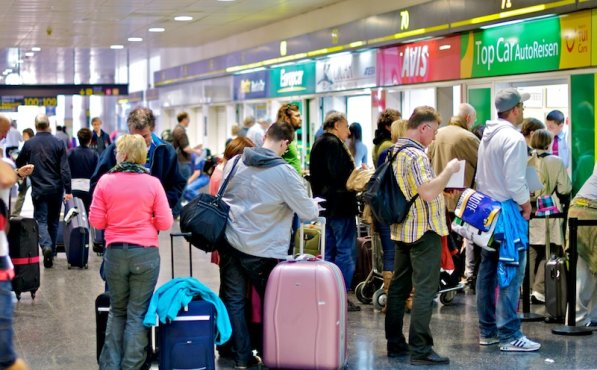
The hire desks are on the lower level of the terminal, on the arrivals floor, right next to the International Arrivals hall. From there, head north, towards the domestic terminals – that's where you'll find the row of counters for both the big international brands and the smaller local operators. Signs marked "Rent a Car" point the way, but it's still worth checking the boards after baggage reclaim, since the exact layout of desks can shift from time to time.
Queues in peak season
During busy periods – especially the winter months and the European summer holidays – flights can land at LPA as often as every five minutes. That means the hire desks fill up fast, and queues can stretch well beyond what you'd expect. If your flight lands during a busy window, allow 30 to 60 minutes just for the desk itself. Booking online in advance and pre-registering your details speeds up the paperwork, but it won't change what happens after you leave the desk.
Signing the contract – and collecting the actual car
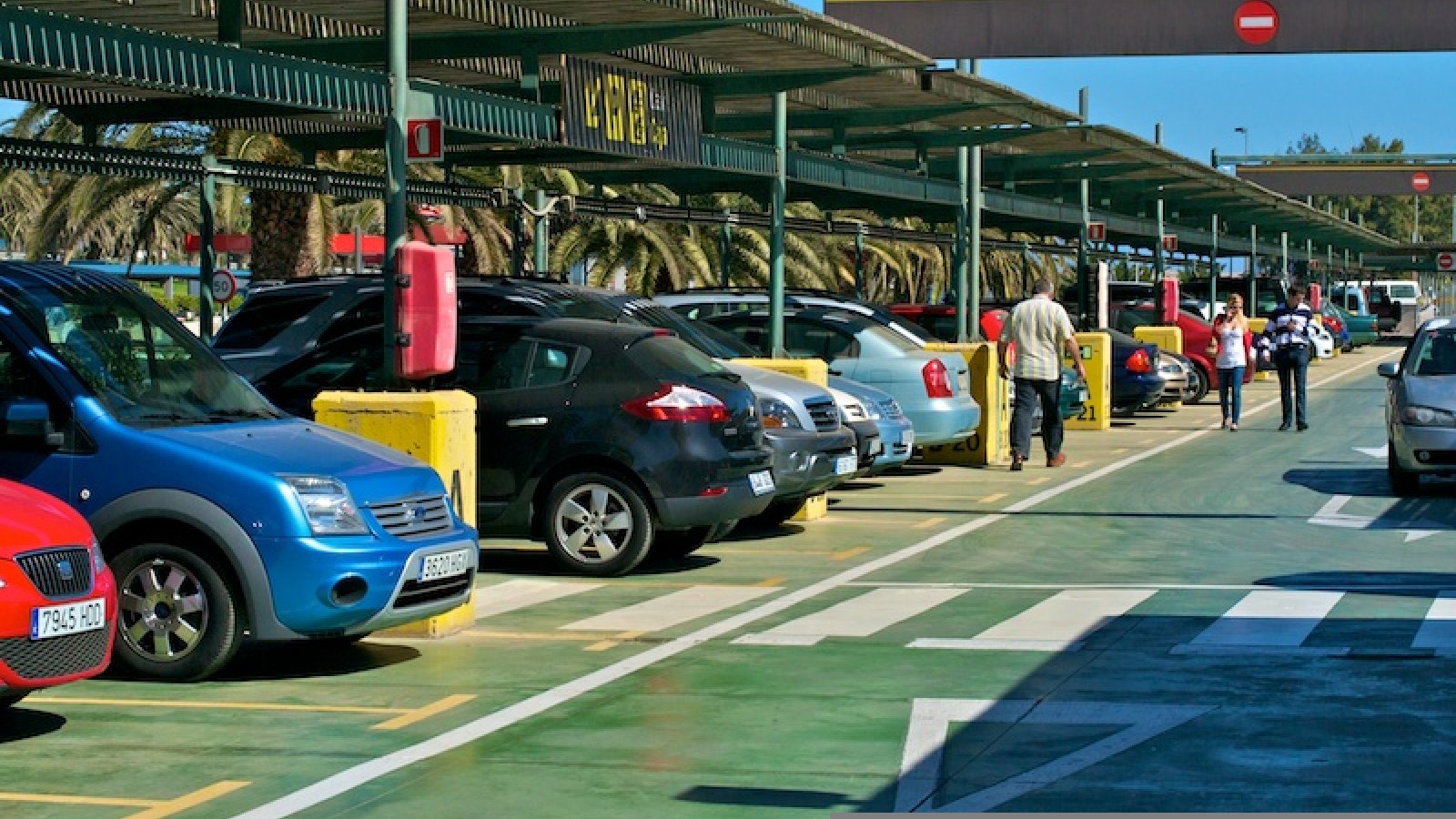
Once you've signed at the airport desk, the story often isn't over. Many providers – particularly the cheaper ones – don't hand over the car at the terminal at all. Instead, a shuttle bus takes you to an off-site depot, which can be up to 5 km from the airport, where the vehicle is finally brought round and checked over with you. Building in up to three hours between landing and actually driving away is a realistic expectation, especially in peak season and with budget operators.
Photograph every mark before you drive off
Take detailed phone photos of the car at pick-up – every scratch, every dent, every wheel rim, from all sides and in good light. There's a simple financial reason for this: a daily rate of £15–20 barely covers maintenance, wear and the cost of running a desk at the airport. Budget operators often make their real margin on extra insurance and on charging for damage found at drop-off – sometimes damage that a stranger caused while your hire car was simply parked. A thorough set of photos before you leave the depot is your strongest protection against being charged for something you didn't do.
Driving on the right – and finding the correct motorway exit
If you're used to driving on the left at home, Gran Canaria takes a bit of adjusting to – Spain drives on the right, and it's worth reminding yourself of this before you pull out of the depot, especially at roundabouts and junctions. As soon as you leave the airport grounds, you'll need to choose a direction: North exit takes you towards Las Palmas de Gran Canaria and the north of the island; Central exit takes you south towards Maspalomas and the southern resorts. Picking the wrong one on the GC-1 motorway can cost you real time, as the next turning point is often several kilometres away.
Do you need an International Driving Permit?
This is one of the most common questions around car hire on Gran Canaria. The short answer, based on how things actually work on the ground: in most cases, no – as long as your licence follows a layout similar to the European format.
Both the Guardia Civil at roadside checks and local rental companies tend to take a fairly practical approach. What matters is that an officer can quickly read the key details: the validity period, licence number, holder's name, and the licence categories required. UK licences, as well as licences from countries such as Russia, follow a layout close enough to the European standard that they're normally accepted without any issue. It's a different story for licences with a very different structure – Venezuelan or Arabic-issued licences, for example, can cause problems. A licence issued only in Cyrillic or Arabic script, with no Latin-alphabet version, will generally not be accepted at all.
Two mistakes that cause real problems at pick-up:
| Mistake | Why it doesn't work |
|---|---|
| Showing a photo of your licence on your phone | Photos are easy to retouch or edit – rental companies and police won't accept this as proof |
| Showing your national digital driving licence app | Without access to the issuing country's underlying database, it can't be verified as genuine – neither by rental staff nor by police |
It's always worth bringing the original, physical driving licence. It's the one thing that avoids delays at the desk – and at any roadside check during your stay.
Most hire companies still set a minimum age of 21, with premium or larger vehicles often requiring drivers to be 23–25 and to have held a full licence for at least a year – worth checking at the time of booking.
Parking fines: a mistake that follows you home
Spain takes certain parking offences more seriously than many visitors expect – and Spanish law now shares fines with other EU/EEA countries and the UK, so a ticket picked up on Gran Canaria is very likely to follow you home. Under Spanish traffic law, these are treated as serious offences with a standard fine of €200, usually reduced to €100 if paid promptly:
| Offence | Fine | Note |
|---|---|---|
| Parking in a yellow loading zone (carga y descarga) | €200 | reduced to €100 with prompt payment |
| Parking on the pavement/footpath | €200 | treated as a serious offence |
| Driving or parking in a pedestrian zone | €200 | common in old towns like Vegueta or Triana |
| Double parking | €200 | can also cause an obstruction charge |
Stick to marked bays – blue lines mean paid parking, white lines mean free – and avoid loading zones and pavements altogether. It's a small habit that saves a genuinely large amount of money.
Getting to the desks
Gran Canaria Airport sits directly on the GC-1 motorway, which runs the length of the island from north to south. If you're not hiring a car, Guaguas Global buses leave straight from the terminal: Line 60 to the San Telmo and Santa Catalina bus stations in Las Palmas, Line 66 (hourly) towards Playa del Inglés/Maspalomas, and Line 91 for Arguineguín–Puerto Rico–Mogán. For hire car pick-up itself, no extra walk is needed – the desks are right on the route from baggage reclaim to the exit.
Places nearby
| Place | Distance (straight line) | Direction |
|---|---|---|
| Ingenio (crafts, old town) | approx. 5.5 km | West |
| Agüimes (old town, Barranco de Guayadeque) | approx. 6.5 km | Northwest |
| Telde (historic centre) | approx. 7.5 km | North |
| Arinaga (beach and nature reserve) | approx. 7.8 km | South |
| Vecindario (shops, everyday life) | approx. 11.3 km | South |
| Las Palmas de Gran Canaria (centre) | approx. 21.9 km | North (North exit) |
| Playa del Inglés / Maspalomas | approx. 29.0 km | South (Central exit) |