Gran Canaria Accommodation: Hotels vs Apartments
How to choose between a hotel, an apartment or a rural house on the island
I've spent years managing holiday apartments on this island, working closely with hotels rather than for one, and I've heard the honest — often blunt — opinions of countless visitors who've stayed here. Here's my take on hotels versus apartments, which Las Palmas neighbourhoods are worth your money, and the sea-view mark-up nobody warns you about.
I've spent years managing holiday apartments on this island, working closely with local hotels along the way rather than for one. Add to that the honest — often blunt — feedback I've heard from hundreds of visitors over the years, and when people ask me "hotel or apartment, Las Palmas or the south?", I don't reach for a brochure. I tell them what I've actually seen and heard.
Las Palmas, the South or Inland: Three Different Islands in One
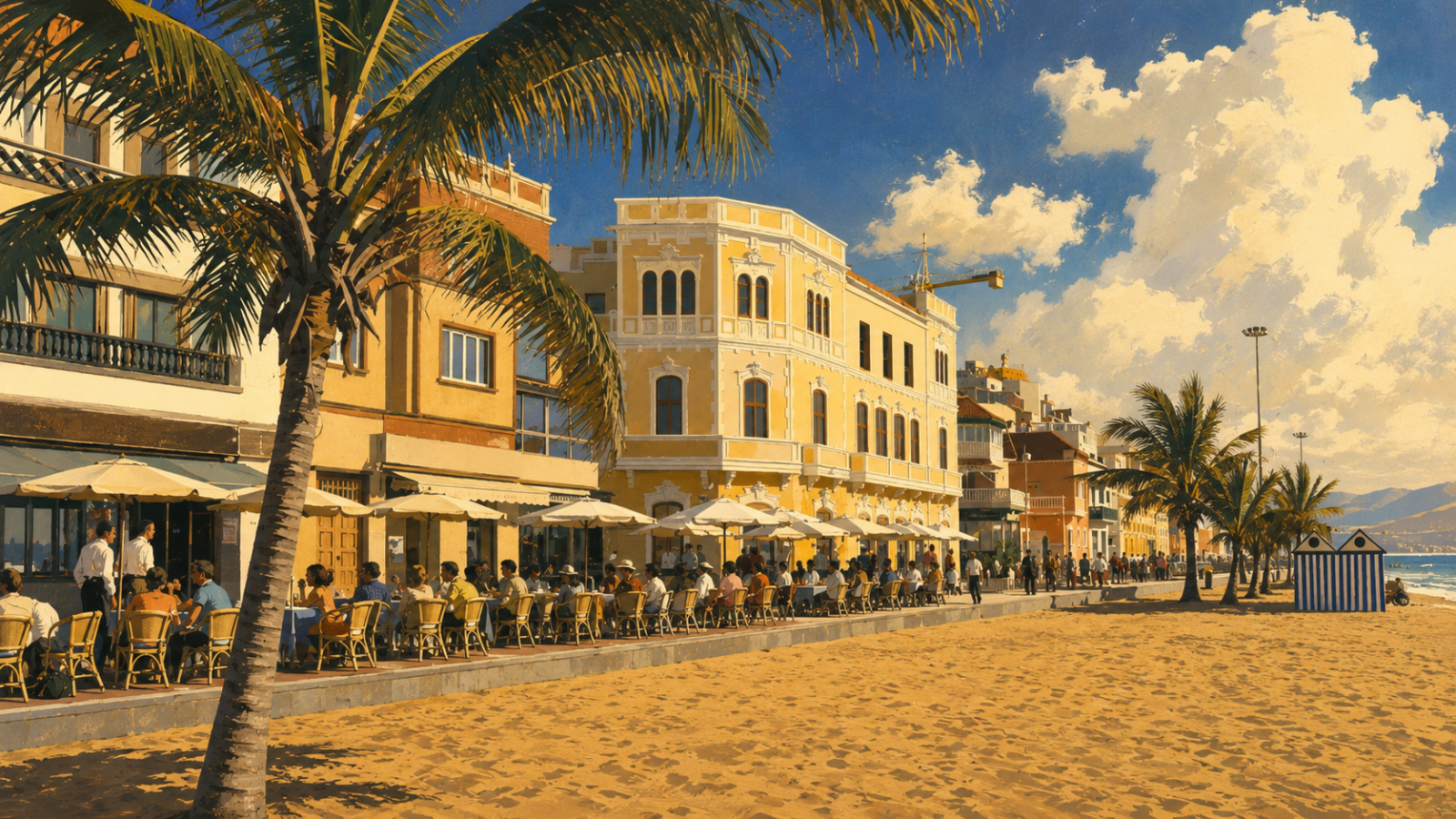
Las Palmas is the real island: busy streets, proper markets, rooftop bars, and Las Canteras beach, where the locals still outnumber the tourists. Stay here and you get genuine Canarian life. The catch? The weather occasionally remembers it's the Atlantic, not the Caribbean.
The south — Bahía Feliz, Playa del Inglés, Maspalomas, Mogán — is a different animal entirely. It was built, quite deliberately, to guarantee you sunshine, sand and an entire retail park's worth of restaurants. What it wasn't built to guarantee is any contact with an actual Canario, unless they're serving your drink.
Inland, up in the hills, is a third island altogether: quiet villages, mountain air, and a pace of life that makes the coast look frantic. Wonderful, if you didn't come here purely to lie flat next to some water.
Which Part of Las Palmas Should You Choose?
Only two areas of this city are genuinely worth your holiday money: Santa Catalina, the strip between the port and Las Canteras beach, and the old town (Vegueta and Triana). Here's the one thing I always have to explain, because the postcards never mention it: the old town sits on the coast, but there is no beach and no swimming there. It's all cobbled streets, cathedrals and colonial balconies — genuinely lovely, but you won't be dipping a toe in anything but a fountain.
So you are, in effect, choosing between two holidays: old-town character and sightseeing on your doorstep, or a beach neighbourhood with swimming and restaurants in abundance. Both are good choices. Just pick the one that matches what you actually plan to do all day.
Everything else in this city, I'd give a wide berth. The outer edges of Las Palmas, and especially what locals call the Ciudad Alta — the neighbourhoods climbing the hillsides above the centre — are a long trek from anything worth seeing, and the local flavour up there has curdled rather than improved. I've had guests book a "great deal" up there and spend half their holiday on buses. Don't be one of them.
Hotel or Apartment: Which One Actually Suits You?
The received wisdom is that a private apartment is cheaper and more "authentic" than a hotel. Having managed flats here for years, and worked alongside hotels rather than inside one, plus having heard what hundreds of past guests really thought once they got home, I can tell you it's only sometimes true. In peak season, a decent hotel can easily match a private rental on price — because plenty of private hosts hike their rates in high season specifically to cover the months when nobody's booking them at all.
What a hotel generally gets you:
- Consistent standards, daily cleaning, staff who answer the phone.
- Proper infrastructure: reception, security, a pool, sometimes a gym.
- A location that is exactly where it says it is.
What an apartment generally gets you:
- More space, your own kitchen, and the freedom to eat dinner at 6pm or midnight — useful with children.
- A chance to shop and live like a local, assuming you've landed in an actual neighbourhood rather than a holiday complex with delusions of authenticity.
One honest observation from years of looking inside these flats: the "local charm" has largely been furnished away. Flat-pack furniture has taken over so thoroughly that the finished apartment often looks exactly like a rental flat anywhere else in Europe. Charming, if you were hoping to holiday inside an Ikea catalogue.
Location and the Price Trap
Hotel or apartment, beachfront and sea view will always cost you extra — no one on this island is shy about that particular mark-up. Be sceptical of any listing built around a beach photo: the property might genuinely be "only" 300 metres from the sand, and that 300 metres might include a four-lane road, a shopping centre, or a hill steep enough to double as exercise.
If you do want to be right on, or as close as possible to, the beach promenade, avoid the small side streets that run straight down to it. They funnel the wind beautifully, which sounds romantic until you're eating breakfast on a balcony that behaves like a wind tunnel. And budget accordingly: a direct, frontal sea view typically adds around 30–50% to the price of an otherwise identical flat or hotel room, compared with something a street or two back. That view is lovely. It is also, quite literally, what you're paying for and nothing else.
The Rental Boom and Its Downsides
Every year, a fresh crop of hopeful hosts lists a new flat, convinced they've found an easy fortune. The result is a genuine glut: across Las Palmas, the average annual occupancy rate for these flats barely scrapes past 20%. In plain terms, most private holiday flats sit empty for the greater part of the year.
Then November arrives, or Christmas, demand genuinely spikes — and a fair number of these hosts whack their prices up sharply to claw back everything they lost sitting empty since spring. Many of them, in my experience, have never seriously looked at what similar properties nearby are actually charging, or whether their own flat is even competitive. They just price it high and hope. Check the exact location and the going rate carefully before you hand over a deposit.
Tips for Hikers, Cyclists and Nature Lovers
Away from the coast, the island's interior hides some genuinely lovely places to stay: rustic country houses, modern flats, boutique hotels tucked into mountain villages. Ideal if hiking or cycling is the actual point of your trip. One practical warning: public transport up there is thin on the ground, so a hire car or scooter is usually not optional, whatever the listing implies.
Thinking About Renting a Car?
Go ahead — just don't expect the island to make it easy for you. Gran Canaria is thoroughly, enthusiastically overpopulated with cars, and Canarios are just as keen as any tourist on driving themselves round to see the sights. The result is predictable.
In Las Palmas itself, you have precisely no chance of finding a free, convenient space outside your accommodation. None. Not "difficult" — none. If you'd rather not spend your holiday circling the block, the only realistic solution is a weekly ticket in one of the multi-storey car parks. Budget for it as part of the trip, the same as you would for meals.
And before you assume this is a Las Palmas problem you can dodge by staying elsewhere: the popular sights, the best beaches, and the big hotel zones in the south are no better. Everyone else had the same idea about renting a car, and they all arrived before you.
Getting There / Transport Connections
Most visitors land at Gran Canaria Airport (LPA), roughly 30 minutes from Las Palmas and around 45 minutes from the southern resorts by road . Regular buses connect the airport with both Las Palmas and the south . Cruise passengers land at the Port of Las Palmas, a short hop from the city centre. Planning to stay inland? Public transport thins out considerably, and a hire car is the sensible option — just read the section above before you get too excited about it.
Nearby Attractions
| Accommodation area | What's nearby |
|---|---|
| Santa Catalina (Las Palmas) | Las Canteras beach, swimming and beachfront dining |
| Old Town — Vegueta/Triana (Las Palmas) | Sightseeing, cathedrals and colonial streets — no beach on site |
| The South (Maspalomas–Mogán) | The Maspalomas sand dunes and some of the island's best beaches |
| Inland villages | Mountain viewpoints (miradores) and the island's volcanic natural monuments |
For more ideas, see our guides to sightseeing in Las Palmas, the best beaches in Gran Canaria, and the island's viewpoints and miradores.
Herb Schubke has lived on Gran Canaria since 2003 and has worked in the island's tourism trade — hotels included — ever since. Read more from him here.
Frequently Asked Questions
Which part of Las Palmas is best for a holiday stay?
Santa Catalina, between the port and Las Canteras beach, and the old town (Vegueta and Triana) are the best-suited areas. The outer edges of the city and the hillside neighbourhoods known as Ciudad Alta are best avoided — they are further from the beach and sights, and the local atmosphere is less pleasant.
Is a hotel or an apartment better value in Gran Canaria?
It depends on the season. In high season, hotels are often just as good value as private apartments, since many private hosts raise their prices to cover quieter months. In low season, apartments are usually cheaper.
Where should I stay: Las Palmas or the south of the island?
Choose Las Palmas for city life, local culture and a real Canarian atmosphere. Choose the south for reliable sunshine, long beaches and a fully developed tourist infrastructure.
When are accommodation prices lowest on Gran Canaria?
Prices are usually lowest in May and June, and highest around November and January . The main tourist season generally runs from October to Easter.
Do I need a car if I stay away from the coast?
In most cases, yes. Public transport inland is limited, so a hire car or scooter makes it much easier to reach mountain villages and hiking trails.
Are private apartment listings near the beach always accurate?
Not always. A listing may say a property is close to the beach when there is actually a busy road, a shopping centre or a steep hill in between. Always check the exact location on a map before booking.