


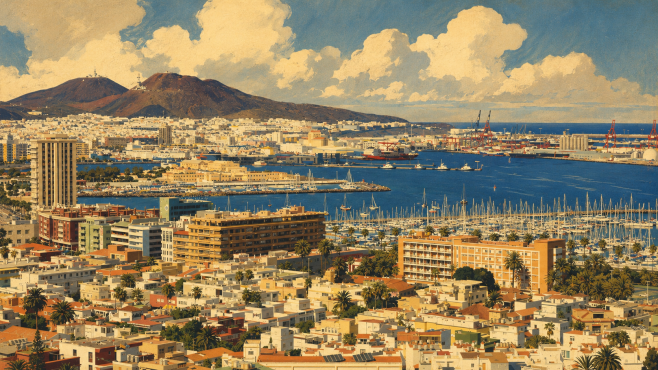
Top Sightseeing Spots in Las Palmas de Gran Canaria
A first-time visitor's guide to the city's best-known districts and landmarks
Las Palmas de Gran Canaria is bigger and more varied than many visitors realise, with two distinct centres four kilometres apart. This guide introduces the historic old town of Vegueta and Triana, the lively Santa Catalina and Las Canteras beach area, and the quieter port quarter of La Isleta, plus the best viewpoints across the city.
Overview
Las Palmas de Gran Canaria is not a small town with a single centre — it is a long, spread-out city that grew northwards from its old town towards the harbour. Because of this, Las Palmas actually has two main centres, roughly four kilometres apart, and both are well worth exploring. This guide gives you a first overview of the most interesting districts and sights, so you can decide where to spend your time.
Vegueta & Triana: The Historic Old Town
Vegueta is the oldest part of the city, founded in the late 15th century, and today its narrow streets, courtyard houses, and small squares hold most of the city's historic sights, including the Cathedral of Santa Ana. Climbing the cathedral towers by lift gives you one of the best views over Vegueta, Triana, and the surrounding rooftops. Next door, Triana is a slightly younger but equally atmospheric old-town district, known for its pedestrian shopping street and elegant early 20th-century buildings.
Santa Catalina & Las Canteras Beach
The second city centre lies around Parque Santa Catalina and Playa de Las Canteras, a wide, sheltered city beach that stretches for around three kilometres. A natural rock reef, La Barra, runs parallel to part of the beach and calms the water, making this stretch popular with swimmers, while the northern end sees more waves and attracts surfers. At the quieter southern end, near the "Jardín Atlántico" corner, you'll find a more relaxed, flower-lined stretch of promenade.
La Isleta: The Old Fishing Quarter
North of the harbour, the district of La Isleta was once a separate island before land reclamation joined it to the rest of the city. It keeps a distinct, authentic character, with small fishing-village streets and, on its far side, quieter beaches that few visitors ever find.
Landmarks Worth a Detour
A few individual sights round out any city walk. The Teatro Pérez Galdós, the city's main theatre, has hosted performances since 1890, and its interior is richly decorated in an early 20th-century style. Near the harbour, a statue commemorates Alfredo Kraus, the world-famous tenor born in Las Palmas, close to the concert hall that also carries his name. Along the coast south of the city, Playa de la Laja is a long, quieter beach that most tourists overlook, and the city's marina (Muelle Deportivo) is a pleasant spot to see yachts and small boats up close.
Getting There / Transport Connections
Vegueta and Triana are best reached on foot from the city centre, or by local bus (guagua) towards Parque de San Telmo. Santa Catalina and Las Canteras are served by several bus routes running along the seafront and are within easy walking distance of the port and cruise terminal. La Isleta is a short bus or taxi ride further north.
Nearby Attractions
| Attraction | District | Good to know |
|---|---|---|
| Cathedral of Santa Ana | Vegueta | Tower lift gives panoramic city views |
| Playa de Las Canteras | Santa Catalina / Canteras | Sheltered swimming area near La Barra reef |
| Teatro Pérez Galdós | Triana | Historic theatre, opera and concert venue |
| La Isleta | North of the port | Authentic fishing quarter, quieter beaches |
| Playa de la Laja | South of the centre | Long, uncrowded beach, off the usual tourist route |